
Common Defects with a Water Heater Found during a Home Inspection

This is the pipe connection to a water heater. Pipes are corroded and appears to have a leak for quite sometime. The drywall is stained and deteriorating. This is a common problem when two different metals (pipes) are used together without a dielectric union. #hireahomeinspector #detailshomeinspections

This is a hot water temperature relief valve. It’s used to expel excess pressure in the form of steam. It should have an attachment that’s run 4-6 inches off the ground. So it doesn’t harm anyone. Safety hazard, recommend repair.

This water heater temperature relief valve has galvanized pipe that needs to extend down to above the floor 4-6” to prevent steam burns. Also, it has threads on the end which is another safety hazard. The threads allow you to cap it. There’s a great “MythBusters” episode on it.

This is an older water heater missing seismic straps. They are recommended for top and bottom. This is a possible safety concern and usually gets called out by the appraiser as well. It’s also installed in a conditioned area which requires a drip pan. These are common issues that are found during a home inspection that should be addressed to prevent safety issues.
Contact us today to schedule a home inspection. Schedule online at detailshomeinspections.com
Radon Mitigation Defects Found during a Home Inspection
Here’s a one year old builders warranty inspection. This is the passive radon pipe that’s not installed correctly. You can see that the pipe terminates at the vapor barrier. It should be below the vapor barrier. We see this often. Here’s a link for the proper installation. https://www.epa.gov/.../files/2014-08/documents/archdraw.pdf

This one is a little better with the EPA installation instructions. Still needs to be under the vapor barrier. This is doing nothing for radon mitigation.

This one is taped up with a vapor barrier, but its above the other vapor barrier. The lower vapor barrier is what’s used to funnel any radon gas to the passive system like a chimney to the pipe, and out to the exterior. Recommend repair.

This image is of the upper part of the passive radon mitigation on a new build in the crawlspace. They had the lower part installed correctly per EPA installation instructions. Except they terminated it in the crawlspace just below the sheathing, instead of routing it to the roof and exterior. Recommend repair.

HVAC Defects Found during Home Inspections
Here’s a damaged HVAC duct in a crawlspace. It appeared that a rodent damaged these ducts. The seller didn’t know these were damaged. This one had big holes in it that were blowing into the crawlspace wasting energy. Recommend repair.

This duct had a big hole and rodent droppings. It also, was hanging on the ground and was wicking up moisture damaging the insulation. The duct was in need of replacement. Recommend licensed HVAC contractor repair.

This duct was disconnected and laying on the ground for some time. It was still pumping out heat. Owners were wondering why that room was always colder.

Unfortunately this is a common find. Here’s a homeowner repair. I was in the crawlspace running the furnace and could feel the heat coming out of the damaged area. Recommend licensed contractor repair. It will pay for it’s self in the energy savings.

Exhaust Vent Defects found during Home Inspections
These are bathroom exhaust vents that are exhausting to the attic. This is common for houses from 60’s to 90’s. These vents should be routed to the exterior via a roof vent. This will prevent the exhaust vent from expelling hot moist air into the attic, which can lead to condensation and mildew buildup. Recommend repair.

This is a kitchen exhaust vent. The vent material is flexible rigid material, this is improper material. This kind of material is conducive for catching grease buildup and becoming a possible fire hazard. The ductwork for the exhaust system needs to be smooth and have as few bends as possible and should be made from galvanized steel, copper or stainless steel. The ducts need to be mechanically fastened and sealed with tape or mastic. If tape is used, it should be metal-backed and not conventional cloth-backed duct tape, which can dry out and crumble.

This is a bathroom exhaust vent. This is improper material. The one in the picture is for dryer exhaust from appliance to the wall connection. It’s made of foil paper and can easily be damaged in the attic, creating unwanted hot moist air expelling to the attic. Plus it’s recommended that these be insulated to prevent heat buildup and condensation in the attic. Recommend repair.

Check this one out, this is my favorite. It’s the kitchen and bathroom exhaust vents venting into the main sewer plumbing vent. This is a possible safety hazard. Sewer gases are flammable and the exhaust vent could be a source of ignition. Recommend repair by licensed contractor.

Electrical Defects Found During a Home Inspection
This electrical panel has double tapped branch wires. This is a safety hazard, for this reason. It can cause arching, which can cause heat and fire hazards. Recommend licensed electrician re-evaluate/repair as needed.

This electrical panel had 2 AFCI (arc fault circuit interrupter) breakers. One wasn’t functioning properly. These are designed to prevent arcing which can cause fires. Recommend licensed contractor repair.
#homeinspector
#detailshomeinspections

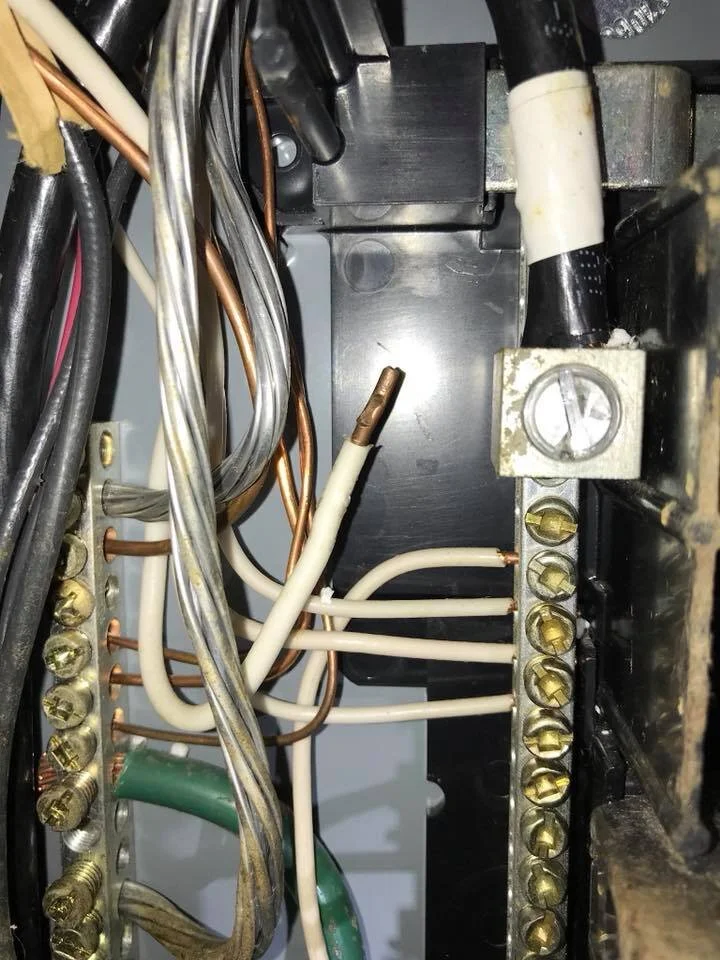
This is a loose wire in an electrical panel, safety hazard. It should be capped/taped to prevent a shock hazard. If this touched the panel it would make the panel energized.
This is a photo that shows a damaged breaker pole. The panel label states that it requires 2 pole breakers in the service section. Its required to have 6 or less hand movements to shut off the main service disconnect area in an electrical panel. Recommend repair
